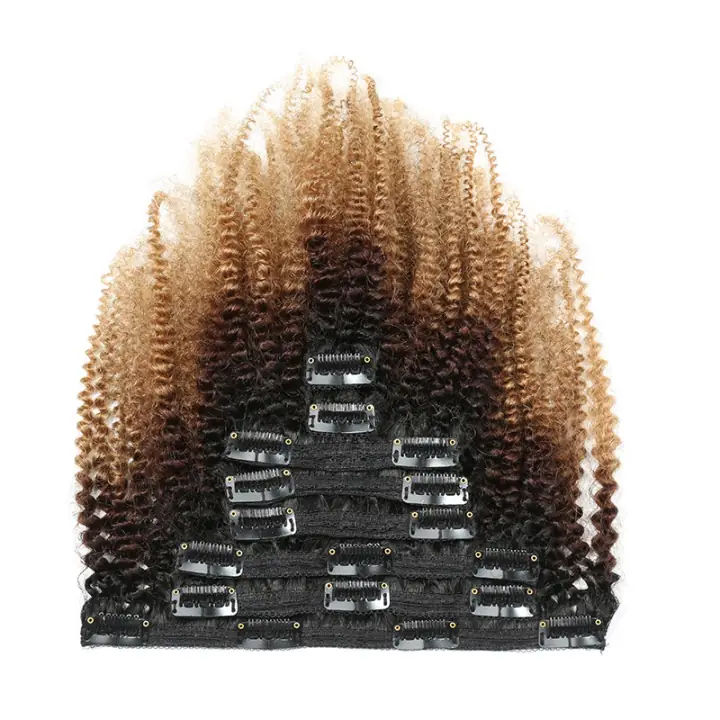
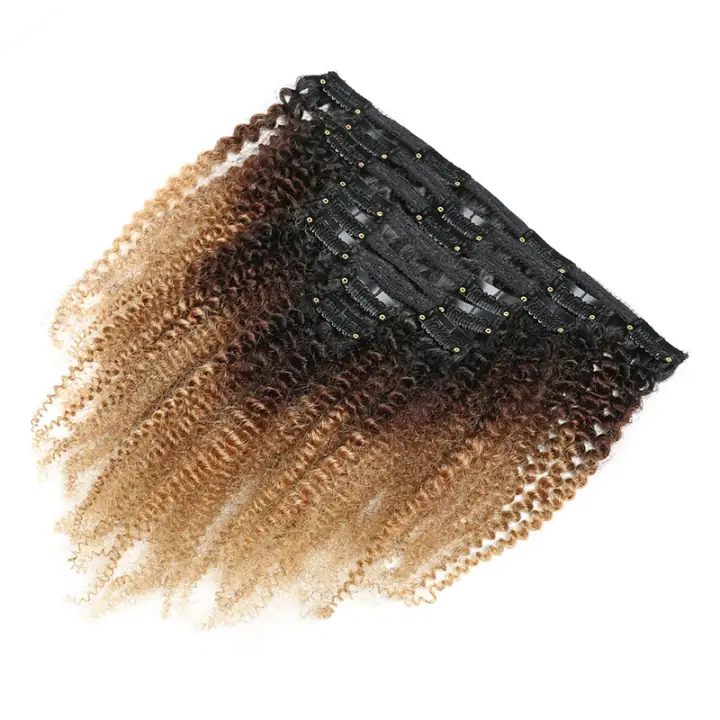
Afro Kinky Clip-in Extensions
From £39
Free tracked UK delivery on every order
100% human hair, never synthetic
Glueless styles: pop it on and go
Clear UK returns, written in plain English
Hair guide
4C hair has the tightest coils on the hair typing chart: tiny, closely packed and full of volume, with more shrinkage than any other type. Here is what it is, how it compares with 4A and 4B, and a gentle routine for moisture, length and protective styles.
The basics
4C hair is the tightest coil pattern in the hair typing system. The coils are so small and closely packed that you often cannot see a clear pattern unless you look up close. Strands can be fine, medium or coarse, and as 4C hair dries it can shrink to a fraction of its stretched length.
The 1A to 4C chart was popularised by stylist Andre Walker in the 1990s, and his original Type 4 stopped at 4B. 4C came later, from the natural hair community, to name the tightest coils. The labels describe curl pattern and nothing else: not how healthy your hair is, how fast it grows or whether it is "good" hair. Every texture is beautiful, and most heads have a mix, such as 4B at the crown and 4C at the nape.
What 4C hair needs most is moisture and gentle handling. As the British Association of Dermatologists explains, your scalp's natural oil cannot travel easily along tightly curled strands, so Afro-textured hair dries out and breaks more easily. It also knots and tangles more often than straighter hair, so rough combing snaps strands.
Compare
Find your closest match on clean, product-free hair that has dried unstretched. Check a few areas: your crown, edges and nape may differ.
| Type | Pattern | Look and feel | Shrinkage | What it needs |
|---|---|---|---|---|
| 4A | Springy S-shaped coils, about the width of a crochet needle | Defined, soft and springy | A lot | Moisture, plus a cream or gel to define |
| 4B | Sharp Z-shaped bends instead of round coils | Fluffy and cottony, with a less defined pattern | More | Rich moisture and stretched styles such as twist-outs |
| 4C | The tightest coils, with little visible pattern unless you look closely | Dense and full, soft to wiry, quick to feel dry | The most | Layered moisture, very gentle detangling and low-manipulation styles |
Your type is a starting point, not a rule. Strand thickness, density and porosity (how easily your hair takes in water) shape your routine as much as curl pattern.
If your hair is a mix, build your routine around the driest, tightest sections.
Side by side
4B and 4C are close cousins, and plenty of people have both. Where they differ:
If your routine keeps your hair soft and your ends intact, the exact label matters less. For 4B styles, deep conditioning and texturisers, read our 4B hair guide.
Your routine
Water hydrates your hair, and oils, butters and creams hold it in. Layer them on damp hair, section by section, with the LOC or LCO method:
Try each for a few wash days and keep whichever leaves your hair softer for longer. Between washes, mist and reseal your ends, which the American Academy of Dermatology calls the oldest, most fragile part of your hair.
The British Association of Dermatologists suggests washing every 1 to 3 weeks, or whenever you have build-up or an oily scalp: too often dries hair out, and too rarely can irritate your scalp. A gentle wash day:
Twist or plait your hair into sections so it cannot tangle. If it is very dry, coat the lengths with oil or conditioner first.
Massage a gentle shampoo into your scalp with your fingertips, not your nails, and let the lather rinse through the lengths.
Use plenty of rinse-out conditioner for slip. Detangle section by section, ends to roots, with your fingers, then a wide-tooth comb or a soft brush with widely spaced bristles.
Leave a richer conditioner or mask on for the time on the label, under a thermal cap or warm towel if you like.
On damp hair, apply your leave-in, then follow your LOC or LCO order.
Blot with a microfibre towel or cotton T-shirt and dry in twists, plaits or bantu knots. If you blow-dry, use a heat protectant and a low setting.
Rushed detangling snaps strands. Skip fine-tooth combs, and when you feel a knot, work it loose with your fingers.
Your kit
You do not need a shelf full of products. A small kit covers most routines:
Sulphate-free shampoos are often recommended for 4C hair, but the evidence is thin: a 2015 review in the International Journal of Trichology found no published analyses of how well they clean or how gentle they are. Go by feel. If a shampoo leaves your hair squeaky and tangled, try a milder one.
Be wary of big promises: no leave-in or styling cream makes hair grow faster. A good one reduces breakage, so you keep more of what grows.
Ingredients
There is no single best leave-in conditioner for 4C hair: the best one keeps your hair soft and easy to handle for days. Conditioners are built from a handful of ingredient groups. Look for:
Then let your hair decide:
Styling
4C hair holds almost any style. The kindest keep your ends tucked away and your hands out of your hair, and switching styles regularly stops the same spots taking the strain.
Done gently, braids and twists protect your hair. The British Association of Dermatologists advises taking braids out within 6 weeks, leaving your edges out and treating a sore scalp as a sign they are too tight.
Length retention
Long 4C hair is completely possible. Two things hide it: shrinkage, which makes long hair look far shorter, and breakage at the ends, which cancels out growth at the roots.
Growth itself is slow and steady. In a study of 38 young adults from central and western Africa, hair grew about a quarter of a millimetre a day on average, roughly 9 cm (3.5 inches) a year, with big differences between people. So length is mostly about keeping what grows:
Thinning edges, bald patches, soreness, itching or bumps on your scalp? See your GP, a dermatologist or a trichologist. Traction alopecia can improve if the pulling stops early, but long-term pulling can make hair loss permanent. Our hair loss guide covers gentle wig options.
Protective styling
A wig can give your own hair a rest from daily styling. The British Association of Dermatologists notes that wigs can be protective, because your hair is tucked away underneath, usually in cornrows or twists, safe from daily manipulation. Look after that hair:
Leaving some hair out? Heat-styling leave-out to match a wig can cause long-term damage if you overdo it, so choose a texture your hair already matches: afro kinky blends with natural 4C coils, and kinky straight looks like 4C hair after a blow-out. New to wigs? Start with how to put on a wig.
Shop the texture
From £39
From £139
From £129
Questions
Anything else? Email bolt70business@gmail.com and a real person will help.
Very tight, closely packed coils, often with little visible pattern unless you look up close. It has lots of volume and shrinks more than any other hair type.
The British Association of Dermatologists suggests every 1 to 3 weeks, or whenever you have build-up or an oily scalp. Washing too often dries hair out, and too rarely can irritate your scalp.
Yes. Long 4C hair comes from keeping the length you grow: moisturise often, detangle gently, keep tension low and protect your ends at night.
Not harder, just different. It needs more moisture and gentler handling than looser textures, and a simple routine you repeat makes it much easier.
Yes, if you care for the hair underneath: loose cornrows, regular washing and moisture, a satin wig cap, no glue on your hairline and the wig off at night.
The one your hair responds to. Look for water near the top of the ingredients, a humectant, a conditioning agent and an oil or butter, then test one product at a time.
Find your crown
Answer five quick questions about your hair, your look and your time, and we will match you to your crown.
Free tracked UK delivery is included on every order.
Checkout opens when the store goes live. Your bag is saved on this device, so nothing is lost.