Put On & Go
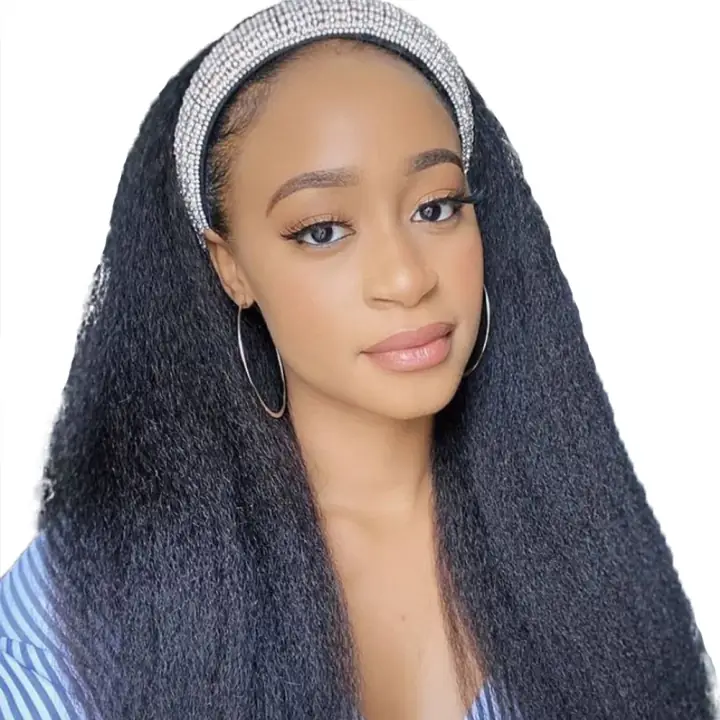
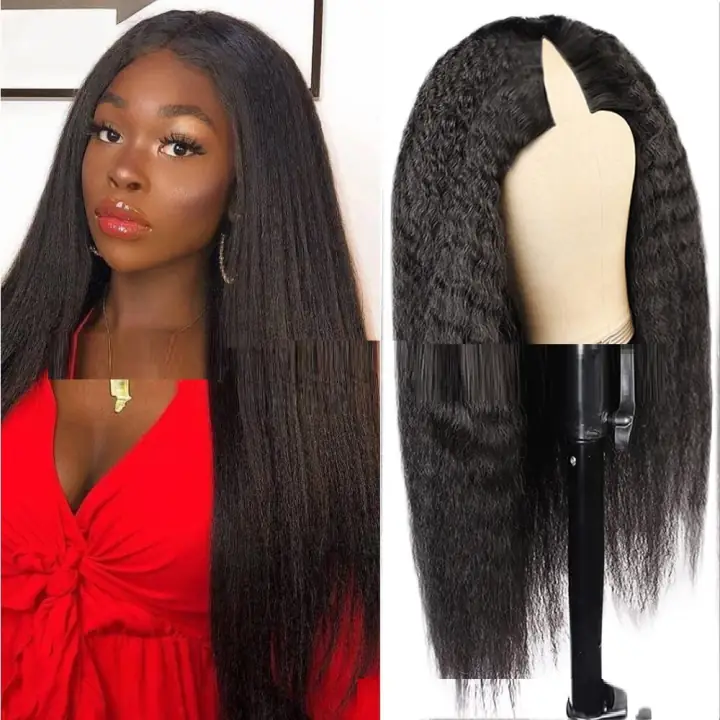
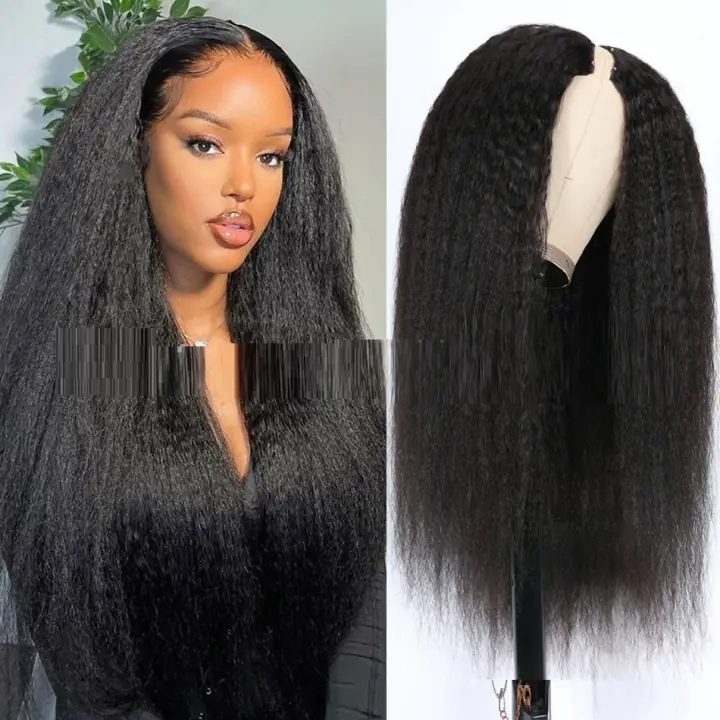
Kinky Straight V-Part Wig
From £99
Free tracked UK delivery on every order
100% human hair, never synthetic
Glueless styles: pop it on and go
Clear UK returns, written in plain English
Hair and culture
Why do Black women wear wigs? For style, for time, to rest our natural hair, because of hair loss, or simply because we love them. Here is the fuller story, from ancient Egypt to the Halo Code, and how wigs stay on.
The short answer
There is no single answer. Ask ten Black women and you may hear ten reasons, often several at once. The big ones:
One woman might wear a twist-out on Saturday, braids on holiday and a wig all winter.
Hair is one of the most expressive things we have, and a wig lets you change it as often as your mood. A sleek bob on Monday, big curls for a wedding, a honey blonde you would never bleach your own hair to try.
Plenty of us also choose wigs that look exactly like our own hair, coils and all, because we love our texture and want it on days with no time to style it. Start with our guide to 4C hair.
Afro-textured hair is more fragile than European or Asian hair, and more prone to knots and dryness, as the dermatology team at St George's Hospital explains. So every comb-through, every pass of the straighteners and every tight style takes a toll.
A wig is one of the simplest ways to step back. Your hair rests in loose braids or twists underneath, away from daily handling, and you style the wig instead. The same leaflet says wigs can be protective for this reason, and lists a wig over a satin wig cap among the lowest-risk styles for traction alopecia.
Protective only works if you protect what is underneath. Keep braids loose, keep cleansing and moisturising your hair and scalp, and choose a satin wig cap, which causes less friction than cotton or nylon and absorbs less moisture. Less heat and less manipulation is the whole idea.
If you have 4C hair, you know wash day is a commitment. Detangling, washing, conditioning, styling and drying can swallow most of a day.
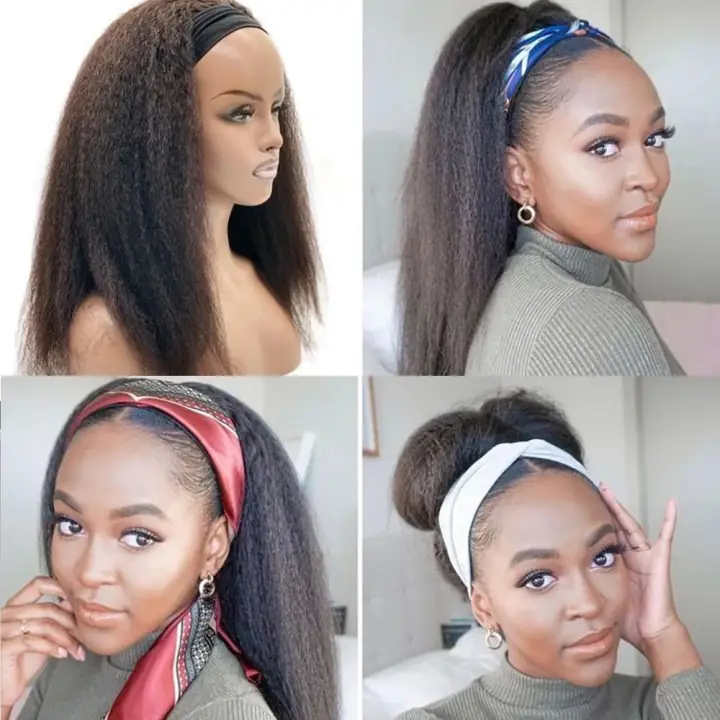
A wig changes the maths. Your hair stays in a low-maintenance style underneath, and getting ready means putting the wig on, adjusting it and going. Headband wigs are the quickest of all, with no lace to lay.
For some of us, a wig starts as a way through hair loss. That is nothing to be ashamed of. Common causes include:
A wig cannot treat any of these, and we are not doctors. If your hair is thinning and you do not know why, see your GP, who can refer you to a dermatologist; a trichologist can help with hair and scalp problems too. Our hair loss guide covers gentle, comfortable wigs, and you may be able to get one through the NHS.
How it works
St George's dermatology team lists the usual set-up: a wig worn over cornrows or twists, with or without a wig cap, held with clips, small combs, stitching, or adhesive or gel. Many of us mix two or three:
Treat glue with the most care. Adhesives have been linked to irritant or contact dermatitis of the scalp, and pulling glue or gel off can rip out delicate edge hairs, so always dissolve it with a proper remover. If you would rather skip it, a glueless wig holds with a band and combs alone, and our step-by-step guide shows how.
History
Wigs are not a modern trend. In ancient Egypt, elite men and women wore wigs as markers of status for over two thousand years, shielding shaved or cropped heads from the sun and helping to keep head lice away. One of the most intact examples, now in the British Museum, is made entirely of human hair set with beeswax and resin. Egypt's earliest known false hair, a set of hair extensions from a woman's burial, dates to about 3400 BC.
Hair care has deep roots too: a Cambridge exhibition traced the 6,000-year history of the Afro comb, from pre-dynastic Egypt to today.
In many African cultures, hairstyles showed a person's tribe and place in society. The slave trade carried millions of Africans across the Atlantic, and Afro hair was looked down on. After emancipation in America, straighter hair was marketed as more manageable, and many turned to relaxers and heat tools. The Afro became a political statement in the 1960s civil rights movement, and a new natural hair movement grew in the 2000s, as St George's dermatology team sets out.
Britain has its own chapter. In 1965 two Jamaican men, Len Dyke and Dudley Dryden, set up shop in Tottenham selling records and hair products to the Caribbean community. Dyke & Dryden became Britain's first multi-million-pound Black-owned business and the first company in Europe to make Black hair products. In 2001 the V&A held a Day of Record, photographing Black British hairstyles, weaves and naturals alike, for its collection.
Hair and the law
Hair has never been just hair for us. The Halo Collective has heard from Black people humiliated at work because their hair was called unprofessional, unruly or a distraction.
Hair itself is not one of the protected characteristics in the Equality Act 2010, but race is, and race includes colour and ethnic or national origins.
The Equality and Human Rights Commission funded the case of Ruby Williams, who was repeatedly refused entry to school or sent home because of a ban on big Afro hairstyles. The court found in her favour by default judgment, her family settled, and the school dropped its rules on volume. In the EHRC's words, Afro hair is inherently linked to race.
In October 2022 the EHRC published guidance on preventing hair discrimination in schools across England, Scotland and Wales. It says a policy banning styles such as braids, locks, twists, cornrows or natural Afros, with no exceptions on racial or religious grounds, is likely to be unlawful indirect discrimination. It even warns that a blanket ban on headwear could discriminate against pupils who wear wigs during cancer treatment.
Beyond the law, the Halo Code, the UK's first Black hair code, asks schools and workplaces to protect Afro hair in every style. Its wording names afros, locs, twists, braids, cornrows, fades, straightened hair, weaves, wigs, headscarves and wraps.
Facing an unfair hair rule at school or work? Start with the EHRC guidance and the Halo Code.
Myths
Myth: it is about hiding. It is not. Plenty of us talk about our wigs openly, name them and swap them in front of friends. A wig is a style, like braids or a silk press.
Myth: wigs and natural hair are opposites. Many women who love their natural hair wear wigs to look after it. The wig goes on, the coils rest underneath, and both are part of the same routine.
Myth: it is about fitting in. Some women have felt that pressure, and the history above shows why. But a wig today is a choice, made for our own reasons. As St George's dermatologists put it, many women cycle through different hairstyles by preference, and no hairstyle is superior to another.
Every reason is valid. Style, protection, time, health, heritage or simple joy: you never owe anyone an explanation for the hair you wear. If you are choosing a wig, every Crown'd wig is 100% human hair, and our five-question quiz can help you find yours.
Shop
From £99
From £99
From £229
From £149
Questions
Anything else? Email bolt70business@gmail.com and a real person will help.
Usually it is not instead of. Many wear wigs to protect and rest their natural hair underneath, and switch between wigs, braids and their own hair whenever they like.
Some do, because of traction alopecia, alopecia or treatment such as chemotherapy. Many others wear them for style, convenience or to protect healthy hair.
It can be. With your hair braided or twisted loosely underneath, a wig keeps it away from daily combing and heat. Keep the braids loose and keep moisturising your own hair.
Not if it fits well and nothing pulls. Damage usually comes from tight braids or bands, glue pulled off the edges and friction, so take it off to sleep and keep your own hair clean and moisturised.
Race is protected under the Equality Act 2010, and the Equality and Human Rights Commission says Afro hair is inherently linked to race. A school or workplace rule that bans Afro hairstyles without good justification can be unlawful indirect discrimination.
Find your crown
Answer five quick questions about your hair, your look and your time, and we will match you to your crown.
Free tracked UK delivery is included on every order.
Checkout opens when the store goes live. Your bag is saved on this device, so nothing is lost.